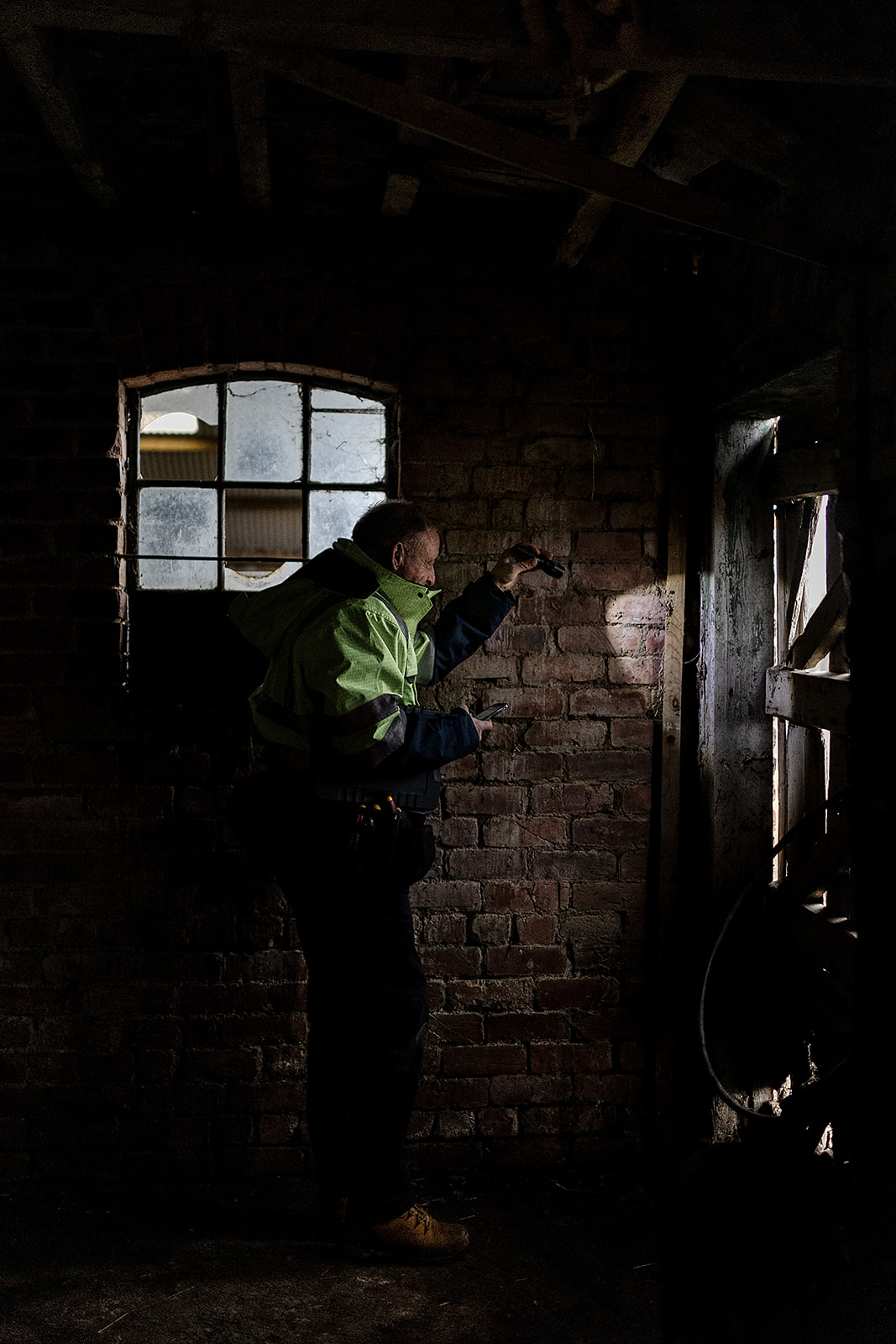
Domestic asbestos survey

Though not a formal requirement from the Health and Safety Executive, we are often asked to complete a domestic asbestos survey. Homeowners invite us to inspect their property to ensure there is no hidden asbestos potentially causing harm to the residents.
It is becoming increasingly common for our surveyors to inspect properties during a house sale. If the building was constructed before the year 2000, it could potentially have asbestos in floor tiles, insulation, or pipe lagging.
Having an independent asbestos professional provide a detailed report on the location, type and condition of the asbestos allows homeowners to take action to ensure there is no risk to health, and for buyers to make an informed choice before making a purchase.
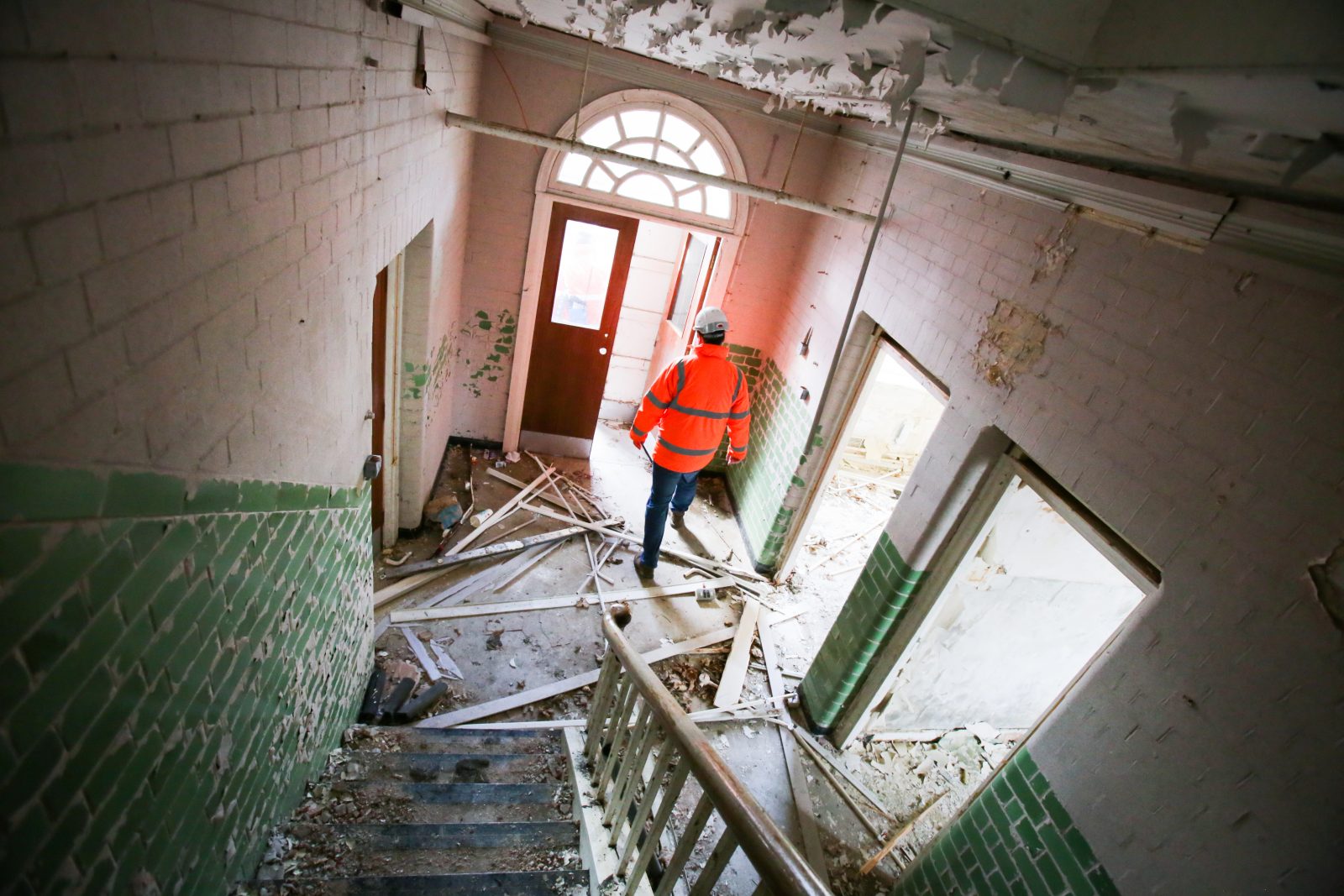
Could there be asbestos in your home?
If the building was constructed or refurbished before the year 2000, you might well have asbestos somewhere on the premises.
Common places to find asbestos in a domestic space are:
- Lagging on pipes and boilers
- Water tanks and toilet cisterns
- Insulating board
- In ceilings and wall cavities
- Floor tiles, textiles and composites
- Textured decorative coatings (Artex)
- In asbestos cement products in the roof, piping or flues
- On sprayed coatings on ceilings, walls, or beams
Check out this helpful infographic to see likely spots for asbestos in the home.
If you think there is asbestos in your home, do not try to repair or remove it yourself unless you have had training for non-licensed asbestos work. Instead, seek advice and stay safe.
Residential asbestos survey
Our residential asbestos survey has been adapted from strict guidance outlined in the Control of Asbestos Regulations 2012 (CAR 2012). It involves the same high standard of inspection and testing, risk assessments and advice for ongoing asbestos management as a legally compliant survey for a commercial property.
Provided the asbestos containing material (ACM) is undamaged and regularly re-inspected to assess condition and risk, it won’t cause you, or anyone who lives in the property, any harm. It is only when asbestos materials are broken or damaged that they release the fibres that cause illnesses. Regular re-inspections and an asbestos management plan (AMP) created by a professional surveyor mitigates this risk.
If a residential survey discovers ACMs that are in a poor condition, we offer end to end asbestos removal support. We are independent of all asbestos removal companies, so if we recommend a contractor, it is because we believe they offer the best, most cost-effective solution for your home.
Is it your duty to manage asbestos?
If you’re the homeowner, it is your responsibility to manage any asbestos found on the premises. If you’re a tenant, you’ll have to look to your contract to see who is responsible for managing the asbestos.
If you’re in a flat or shared accommodation, it’s likely that the owner of the building is the dutyholder for any asbestos that might be present. They will be responsible for managing the common areas. But for your private residence, your contract will let you know if the tenant, building owner or a third party is responsible for managing any asbestos risks within that space.
As a homeowner, if you are planning renovations (or structure demolition) of any of the buildings within your property boundary, you will have to have a refurbishment or demolition survey ahead of the work. These will uncover any ACMs that might be in hard-to-reach areas that could be disturbed during the renovations.
If you are a homeowner or are considering a property purchase and would like to arrange a domestic asbestos survey, please get in touch. Our fully trained and experienced asbestos surveyors are happy to help give you peace of mind for your home.