
Asbestos demolition surveys

If you are planning demolition work to a building built before the year 2000, it could contain asbestos. The use of the material was not banned in the UK until November 1999, despite the dangers of exposure being known since the early 1900s.
Asbestos demolition surveys are needed before the demolition of a building or structure that could contain asbestos. These surveys will identify all asbestos containing materials (ACMs) on site so they can be safely removed before demolition begins. This ensures that there will be no harmful exposure to asbestos fibres during the work.
When are asbestos demolition surveys required?
If you are planning to demolish any part of a building (such as a wall, ceiling, or roof) and it was built before the year 2000, there is a significant risk that it may contain asbestos. A demolition survey is a legal requirement, and non-compliance can lead to lengthy project delays, legal action, and serious risk to health.
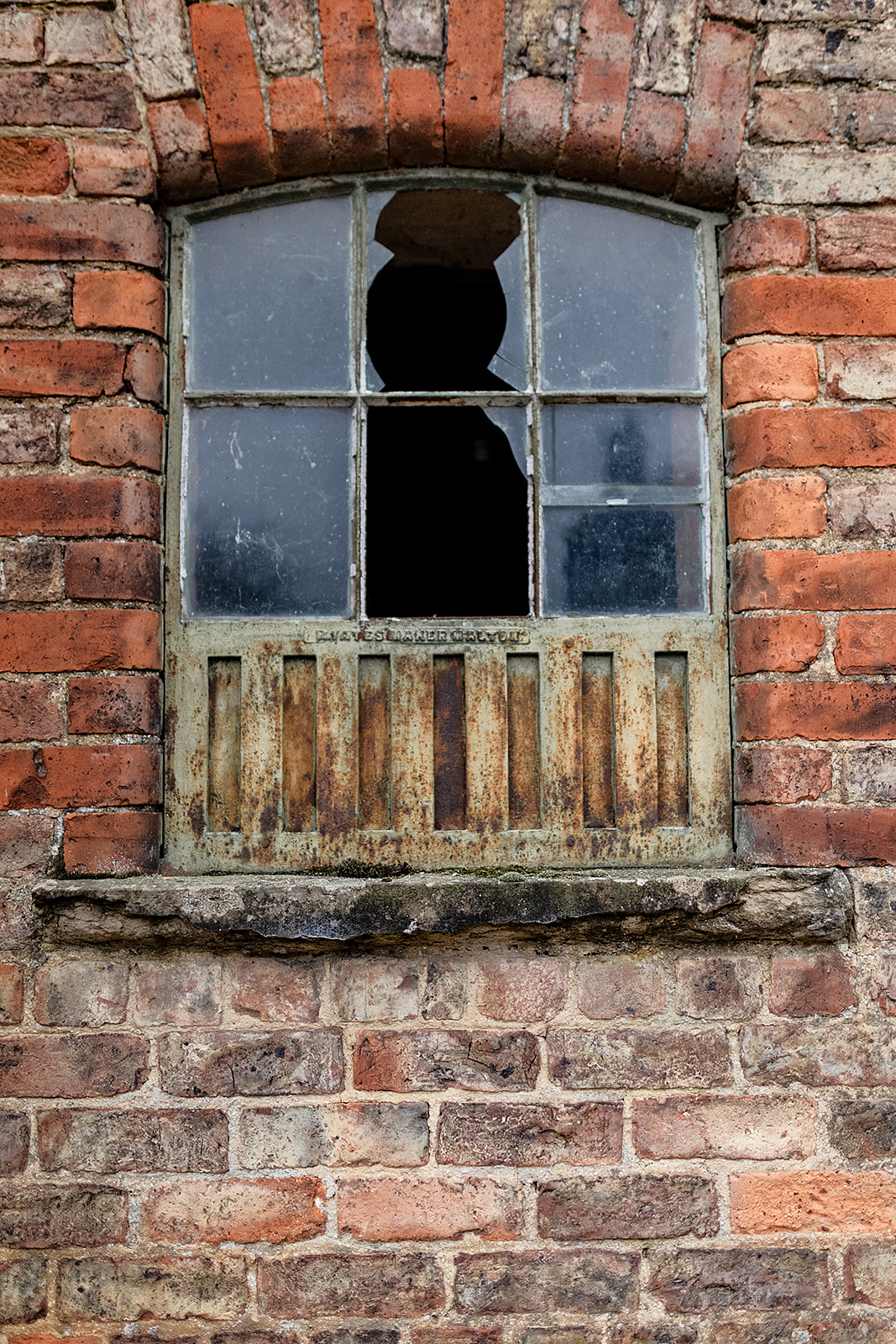
These materials may never have been located during regular management surveys, as they could be inaccessible during the normal occupancy of the building. As a demolition survey is more intrusive than a management survey, the inspector will need to access remote and hidden parts of the structure.
An asbestos demolition survey is mandatory before any work is carried out, whether it’s a total demolition or part of a structure. The survey should be done as part of the preparation process well before demolition begins. This will allow time for the safe removal of asbestos if required before the demolition project begins.
Who can carry out the survey?
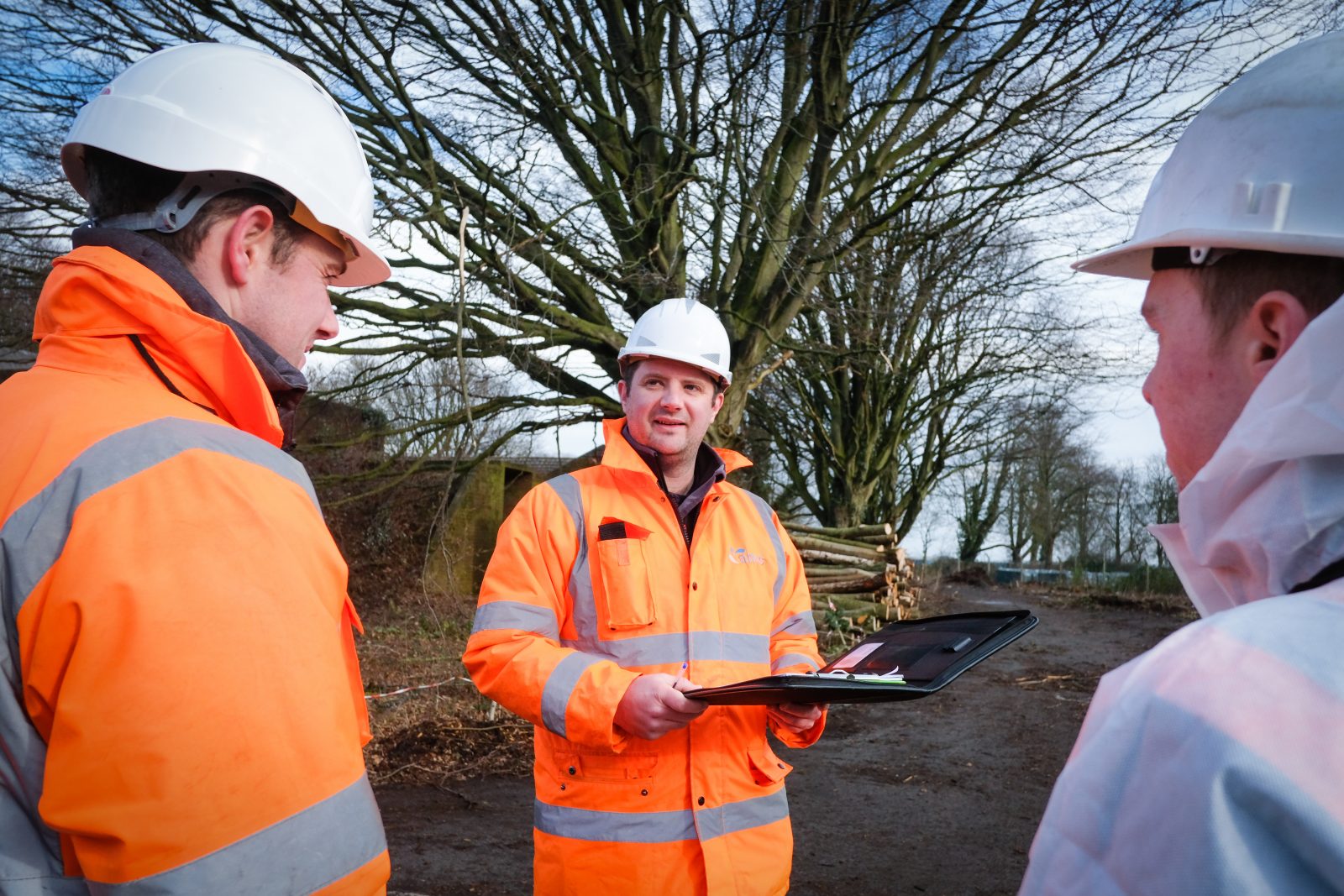
Any type of asbestos survey should be carried out by a fully trained, experienced professional. Demolition surveys are intrusive and carry heavy risks of exposure to damaged asbestos containing materials.
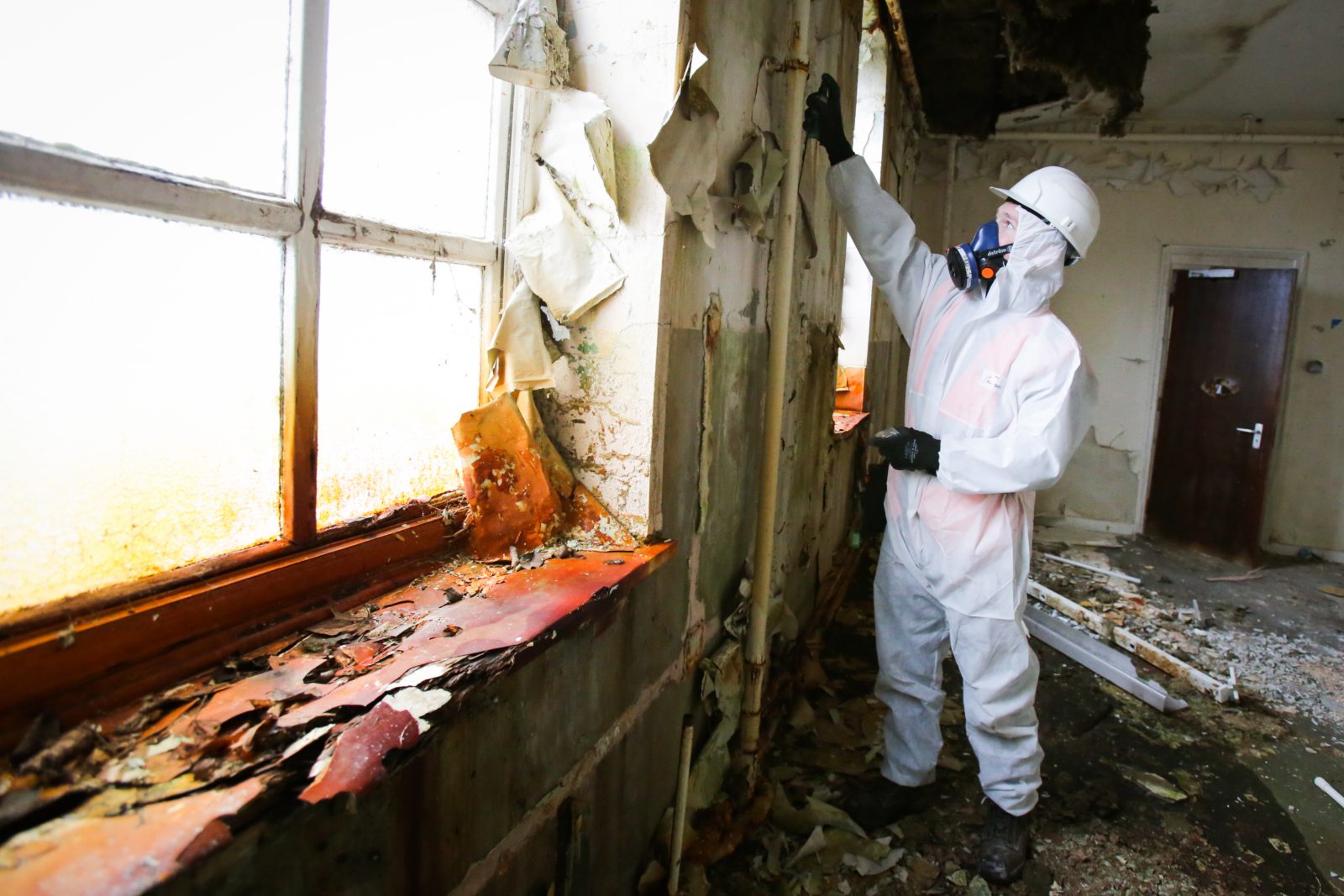
Use of specialist personal protective equipment is required at all times to ensure there is no contact with asbestos fibres. The asbestos surveyor will follow precise safety procedures to ensure no fibres are released into the air during their inspection. Only a licensed asbestos contractor will have the skills required to conduct this survey safely.
What will the demolition survey include?
Unlike a management survey, a demolition survey is intrusive. It includes opening areas to physically access hidden materials. An asbestos demolition surveyor will need to get inside walls, ceiling spaces, roof voids, ducts, and other hard-to-reach areas for inspection. This is done to fully inspect for the presence of asbestos, including in areas that are not visible or accessible during normal use.
While a refurbishment survey will mainly focus on the area that will be worked on, a demolition survey involves assessing every part of the building. It includes inspecting areas that will not be altered during demolition but may still contain ACMs. This is an extra safety precaution as it is during construction work that asbestos materials are most likely to be accidentally disturbed.
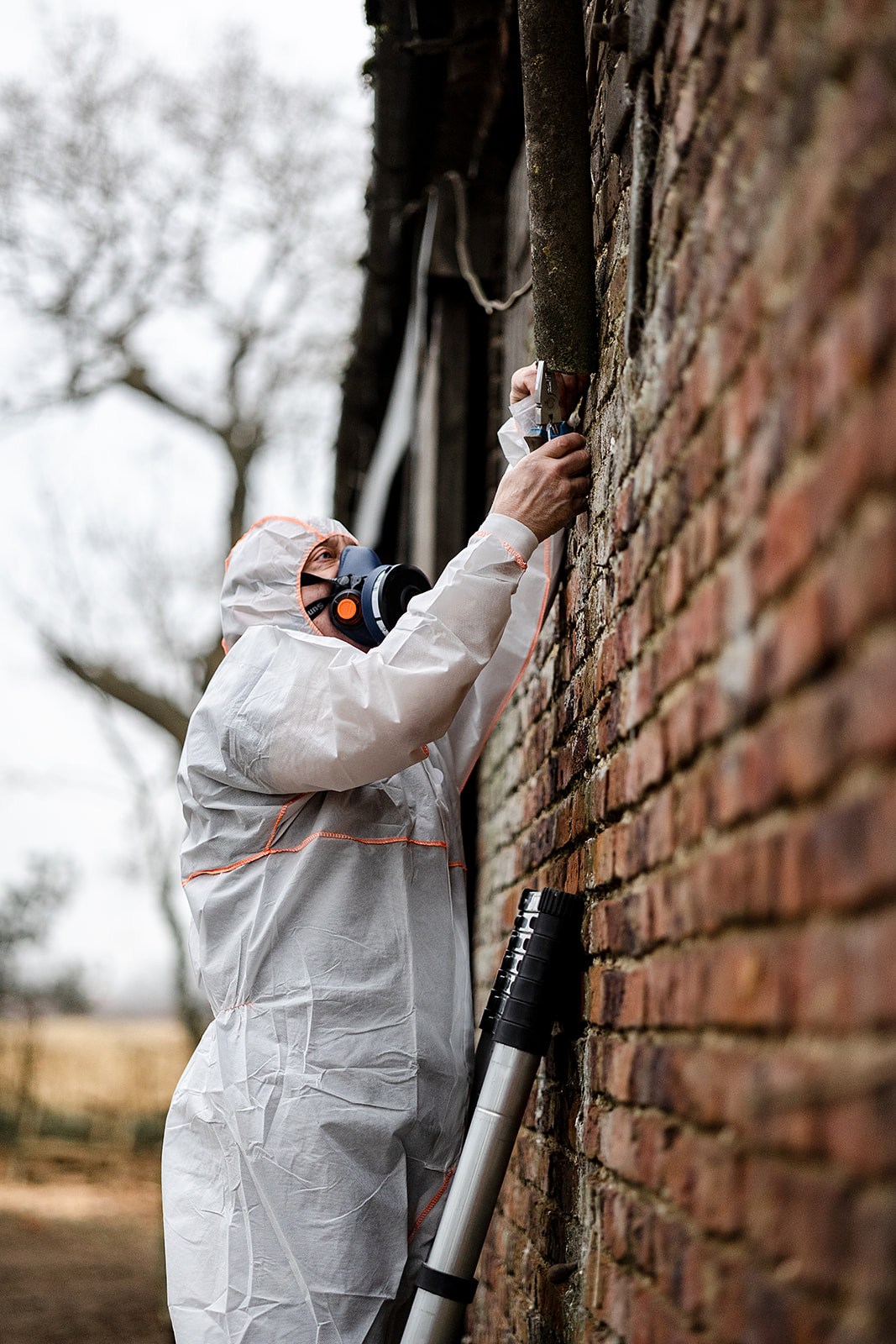
Throughout the inspection, an asbestos surveyor will take samples of any materials that are suspected of containing asbestos, but a visual confirmation cannot be made. These samples will be sent to a specialist laboratory to be analysed. Tests will confirm whether they contain asbestos and identify the type of asbestos present.
The results from these tests and the information gathered during the inspection will then be compiled into a detailed report. It will include a risk assessment and recommended actions to safely manage the asbestos on site. In demolition cases, removal of asbestos containing materials will be the probable outcome.
Post survey report and required actions
Once your site survey has been conducted and sampling results have been returned from the lab, the asbestos surveyor will complete a report of their findings and recommendations. This report must be made available to all relevant parties involved in the demolition, including contractors and workers.
The report will give information on the location of each asbestos containing material on the site. It will also detail the type and the condition of the ACM. A risk assessment on each ACM will be provided with recommendations for the safe removal, containment or management of the asbestos before the demolition work can begin.
A safe work procedure for the handling of asbestos during demolition will be outlined in the document. If ACMs are found in poor condition and pose a risk of releasing asbestos fibres, these materials will need to be removed by a licensed asbestos removal contractor before demolition begins.
However, if the ACMs are in good condition and unlikely to be disturbed during demolition, they may be left in place. Monitoring and controls will need to be put in place to prevent exposure throughout the project and re-inspection will be required in the future.
Your legal responsibilities
Regulation 6 of the Control of Asbestos Regulation 2012 (CAR 2012) stresses the importance of not disturbing ACMs during demolition unless they have been properly assessed and managed. It is your legal responsibility to ensure any asbestos on site will not pose a risk at any point. Non-compliance carries heavy fines and even jail time.
All demolition work must comply with CAR 2012 regulations, including safe handling of asbestos and ensuring workers are protected from exposure. Our asbestos team have over a decade of experience supporting businesses with their premises and asbestos duties. If you are planning extensive building work, please get in touch today.